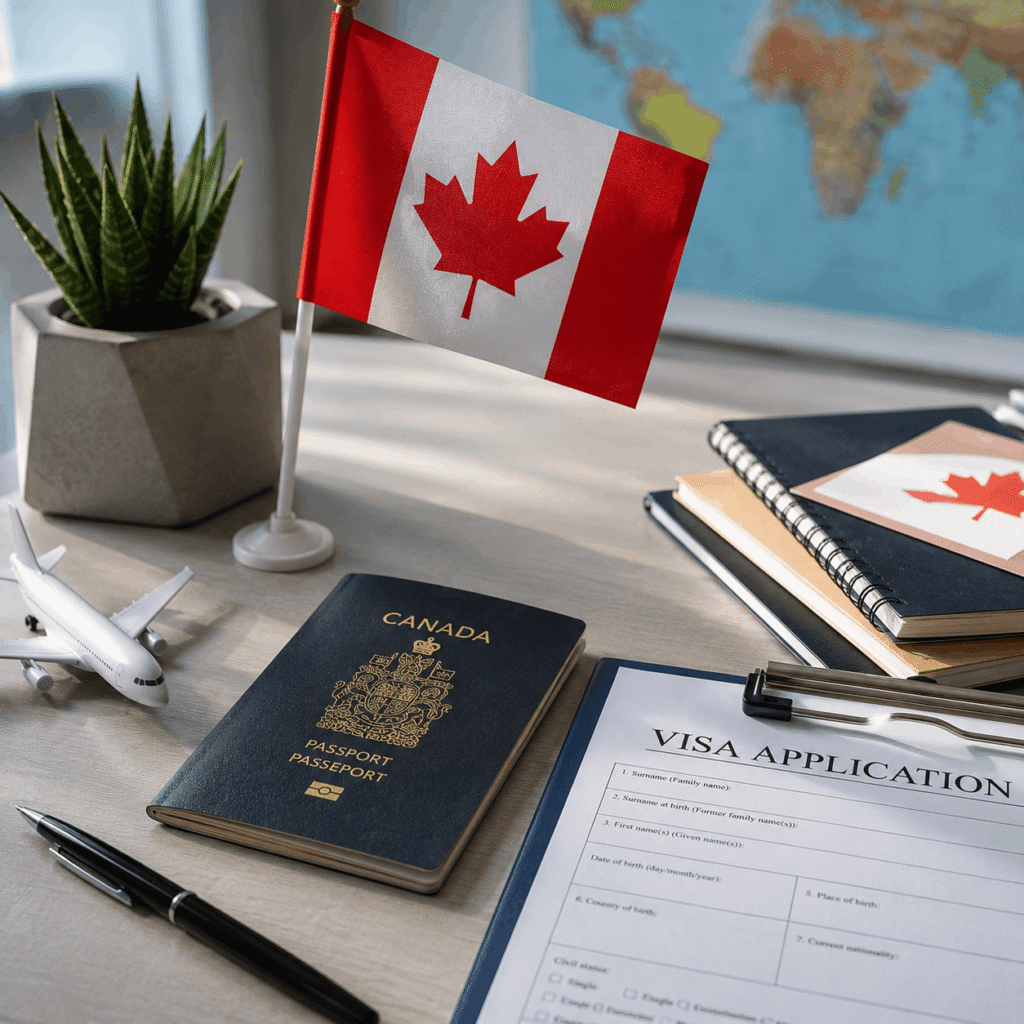
Most people who want to visit Canada for tourism, a family wedding, or a short business trip need a Temporary Resident Visa, commonly called a visitor visa or TRV. It’s a small sticker placed inside your passport once IRCC decides you meet the requirements. Not everyone needs one though. Citizens of visa exempt countries usually just need an eTA instead, which is cheaper and faster to get.
The confusion starts right here for a lot of applicants. People assume TRV and eTA are the same thing, apply for the wrong one, and lose weeks sorting it out. Knowing which category you fall into before you touch the application form saves real time.
Your passport decides this, not your travel plans. If you hold citizenship from a visa required country, you apply for a TRV. If your country sits on the visa exempt list, and you’re flying into Canada, an eTA usually covers you.
A TRV, once issued, is usually a multiple entry visa. It can stay valid for up to ten years or until your passport expires, whichever hits first. Each individual visit still gets capped at whatever period the border officer decides on arrival, typically six months.
An officer reviewing your file isn’t really checking whether you want to visit Canada. They’re checking whether you’ll leave when your permitted stay ends. That single question shapes almost every document you submit.
Strong ties to your home country carry the most weight here. A stable job, property, an ongoing business, or family responsibilities all signal that you have reasons to go back. Weak or unclear ties are the most common reason applications get refused, more than any paperwork issue.
Sudden spikes in your account balance right before applying tend to raise questions rather than settle them. Consistency matters more than a big number sitting there for two weeks.
Timelines shift depending on where you’re applying from and how busy that visa office is at the time. Applications filed from within Canada often move faster than ones filed abroad, and this changes throughout the year based on volume.
The government fee sits at $100 per applicant, capped at 500 dollars for a family of five or more applying together. Biometrics add another $85 per person in most cases, though families can sometimes apply that fee together too. None of these numbers include courier costs, translation fees, or a Visa Application Centre’s service charge if you’re submitting on paper.
A visitor visa application looks simple until it isn’t. The forms themselves aren’t complicated, but proving genuine intent to leave Canada requires the right combination of documents, presented in a way that actually answers what the officer is looking for. Canus Immigration reviews each file for exactly this before anything gets submitted.
We’ve seen how small gaps, an unexplained bank deposit, a missing invitation letter, a job letter that doesn’t mention approved leave, turn into refusals that could have been avoided. Our team checks these details against current IRCC standards so clients don’t find out about a problem after the fact.
For families applying together or students bringing along a parent for graduation, Canus Immigration builds each application around what that specific traveller needs to show. There’s no single template that fits every case here, and treating it like there is tends to backfire.

How long can I stay in Canada on a visitor visa?
Usually up to six months per visit, though the border officer decides the exact period and stamps it in your passport or on your visitor record.
Can I apply for a visitor visa if I’ve been refused before?
Yes. A previous refusal doesn’t block future applications, but you need to address whatever caused the refusal the first time around.
Do I need a visitor visa if I’m just transiting through a Canadian airport?
Depends on your nationality. Some travellers need a Transit TRV even if they’re not leaving the airport, so check your specific country requirements.
Can a visitor visa lead to permanent residence later?
Not directly, but some visitors later become eligible for other immigration pathways. A visitor visa itself doesn’t count as a step toward permanent residence.