CANUS Immigration

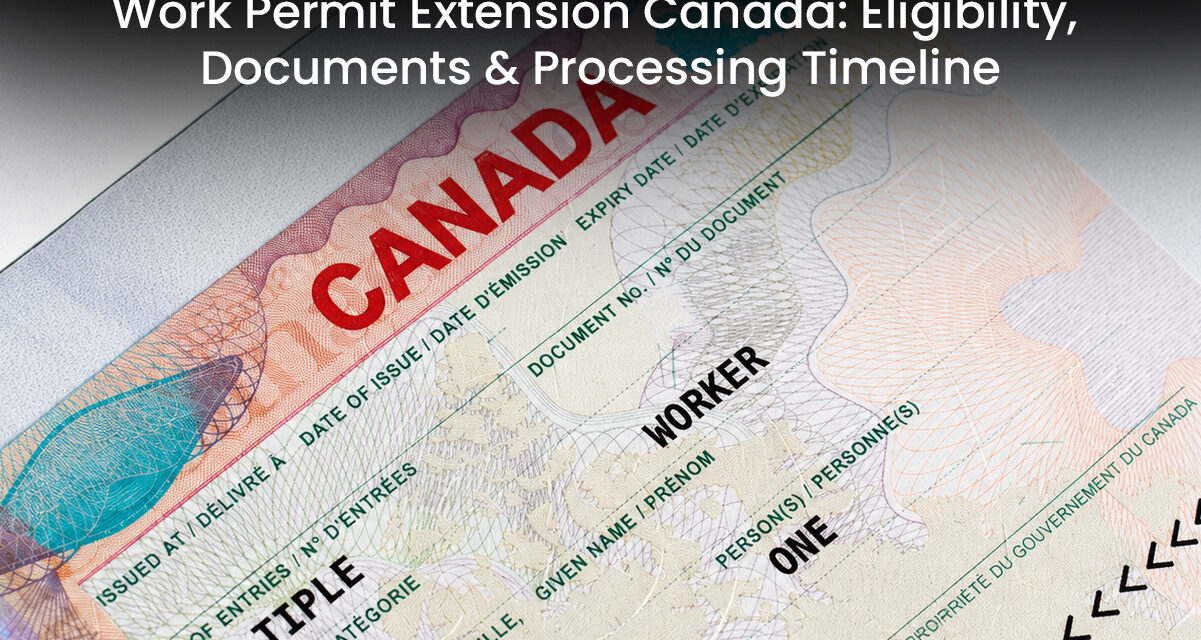
Work Permit Extension Canada: Eligibility, Documents & Processing Timeline

Work Permit Extension Canada: Eligibility, Documents & Processing Timeline Your work permit is not something you want to think about until the deadline sneaks up on you. But that is exactly how most people end up stressed. One day you check the expiry date and realize you have weeks left, not months. A work permit...
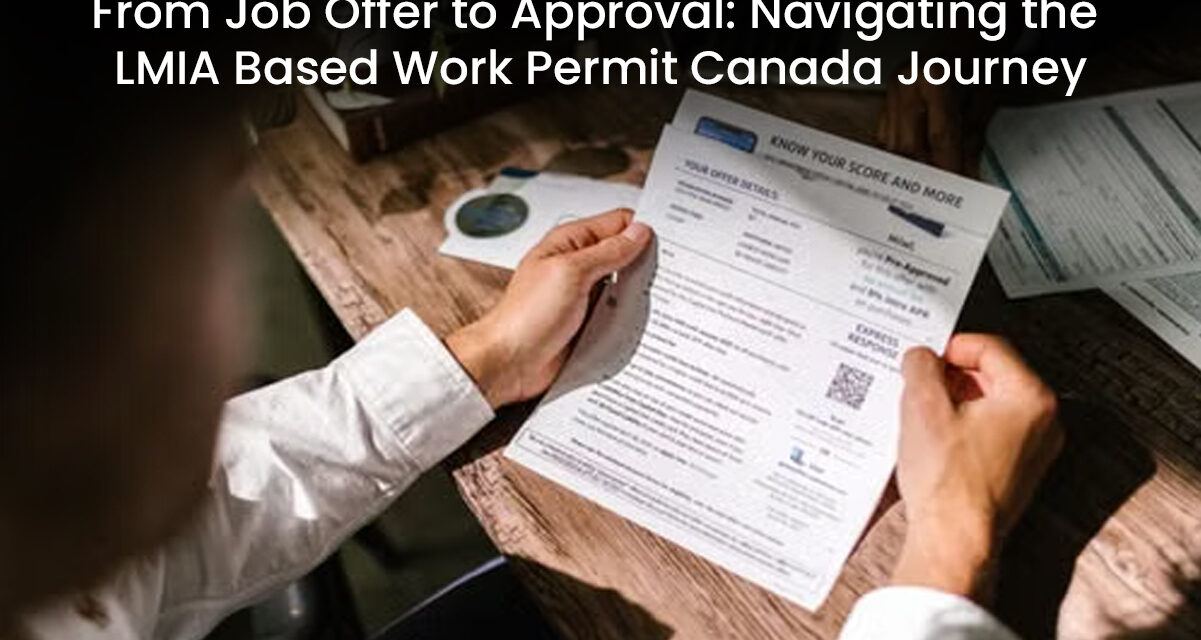
From Job Offer to Approval: Navigating the LMIA Based Work Permit Canada Journey

From Job Offer to Approval: Navigating the LMIA Based Work Permit Canada Journey You landed a job offer from a Canadian employer. That is a big deal. But for many foreign workers, that moment is quickly followed by confusion. What happens next? What does the employer need to do? The process between a job offer...

Open Work Permit Mississauga: A Step-by-Step Roadmap for International Applicants

Open Work Permit Mississauga: A Step-by-Step Roadmap for International Applicants Mississauga attracts skilled workers from all over the world. It sits in the heart of the Greater Toronto Area. Jobs are open across many sectors, and immigration activity here stays consistently high. But working here legally means getting the right permit first. Many people skip...

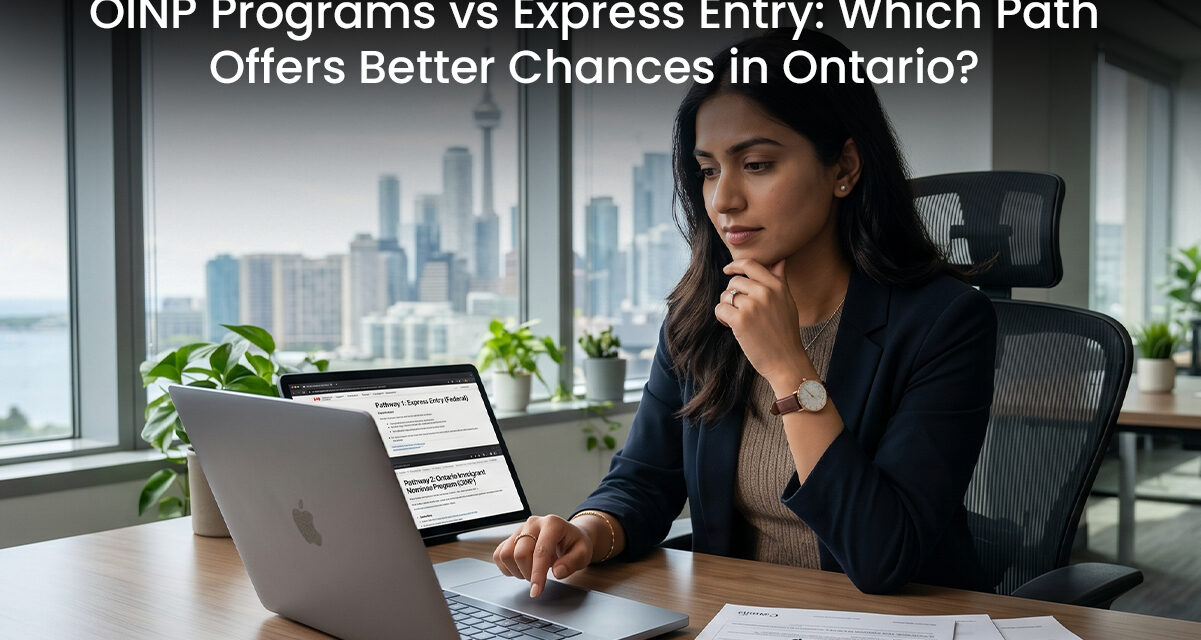
OINP Programs vs Express Entry: Which Path Offers Better Chances in Ontario?

OINP Programs vs Express Entry: Which Path Offers Better Chances in Ontario? This is the question almost every skilled immigrant asks at some point. Both paths lead to permanent residency in Canada. But they work differently. They suit different people. And picking the wrong one can cost you months or even years. So let us...

Canada Family Sponsorship for Spouses: Latest Immigration Updates

Canada Family Sponsorship for Spouses: Latest Immigration Updates Living in Canada while your spouse is in another country is one of the hardest parts of the immigration journey. You are building something here. A home, a career, a future. But the person who matters most is not there yet. Canada has a path for this....

CRS Score Explained: How to Increase Your Chances of Getting Canada PR

CRS Score Explained: How to Increase Your Chances of Getting Canada PR Getting Canada PR feels overwhelming for most people. There are forms, points, cutoffs, and terms that nobody explains in plain language. But once you understand how the CRS score actually works, the whole process starts making sense. This blog breaks it down simply...

IELTS vs CELPIP: Which English Test is Better for Canada Immigration?

IELTS vs CELPIP: Which English Test is Better for Canada Immigration? You have decided to move to Canada. You have done your research, checked your eligibility, and then you hit one question that trips up almost every applicant. IELTS or CELPIP? Both are accepted by IRCC. But they are not the same, and picking the...

Post-Graduation Work Permit (PGWP) Canada: Everything International Students Must Know

Post-Graduation Work Permit (PGWP) Canada: Everything International Students Must Know You finished your degree in Canada. That is a big achievement. But for most international students, the bigger question starts right after graduation: what happens next? How do you stay, work, and build a future here legally? The Post-Graduation Work Permit is the answer most...

Can You Work While Studying in Canada? Rules & Limits

Can You Work While Studying in Canada? Rules & Limits Canada attracts hundreds of thousands of international students every year. The education quality is high. Campuses are diverse. And the country offers real pathways to permanent residency after graduation. But one question comes up before almost anything else. Can you work while you study? The...

Ontario PNP Requirements for Skilled Workers: Full Eligibility Guide

Ontario PNP Requirements for Skilled Workers: Full Eligibility Guide Canada keeps attracting skilled workers from around the world. Ontario, as the largest province, sits at the center of that movement. Every year, thousands of workers apply through the Ontario Immigrant Nominee Program, better known as OINP, to build their lives here. But the process is...

Ontario PNP Requirements for Skilled Workers: Full Eligibility Guide

Ontario PNP Requirements for Skilled Workers

Canada keeps attracting skilled workers from around the world. Ontario, as the largest province, sits at the center of that movement. Every year, thousands of workers apply through the Ontario Immigrant Nominee Program, better known as OINP, to build their lives here.

But the process is not simple. Most people apply without fully understanding what the program requires. That gap costs them time, money, and sometimes their entire application.

Here is what you need to know before you apply.

What Is the OINP and Who Is It For?

The Ontario Immigrant Nominee Program lets Ontario select skilled workers based on what the province actually needs.

It is not a single pathway. It is a collection of streams, each designed for a different type of worker. Some streams target people already working in Ontario. Others focus on international candidates with in-demand skills. A few are specifically for international graduates from Ontario colleges and universities.

The key thing to understand is this: OINP does not replace federal immigration. It adds a provincial nomination to your application. That nomination gives you 600 extra points in the Express Entry system, which almost guarantees an Invitation to Apply for permanent residence.

So getting nominated by Ontario is a very big deal.

The Main Streams You Should Know About

Ontario runs several streams under the OINP. Here are the most common ones for skilled workers.

Human Capital Priorities Stream targets Express Entry candidates with strong profiles. Ontario pulls candidates directly from the federal Express Entry pool. You do not apply to Ontario directly. Ontario finds you based on your profile score and sends you a notification of interest.

Employer Job Offer Stream is for workers who already have a full-time, permanent job offer from an Ontario employer. The job must fall under NOC TEER categories 0, 1, 2, or 3. Your employer also needs to meet specific requirements around business registration and hiring history.

Masters Graduate Stream and PhD Graduate Stream are for international students who completed their degree at an Ontario university. You must apply within two years of graduation and meet minimum language score requirements.

French-Speaking Skilled Worker Stream targets candidates who speak French and have an Express Entry profile. Ontario actively seeks French speakers to support its francophone communities outside of Toronto.

Each stream has its own checklist. Applying to the wrong stream wastes months. Many applicants learn this the hard way.

Core Eligibility Requirements Across Most Streams

Even though each stream is different, most of them share a common set of baseline requirements.

  • Work experience: It is usually non-negotiable. Most streams want at least one year of full-time, paid work experience in a skilled occupation within the last five years. The experience must match the NOC code you are applying under.
  • Language scores: This matters more than people expect. You need to prove your English or French ability through an approved test. IELTS, CELPIP, and TEF Canada are the accepted tests. The minimum scores vary by stream, but higher scores always help your overall profile.
  • Education credentials: Your credentials need to be assessed if you studied outside Canada. An Educational Credential Assessment, or ECA, from an approved organization confirms that your foreign degree is equivalent to a Canadian standard.
  • Settlement funds: Adequate settlement funds are required for some streams. You need to show that you have enough money to support yourself and your family after you arrive in Ontario.

Intent to live in Ontario is another requirement the province takes seriously. You should be prepared to explain your genuine connection to Ontario, whether through past work, education, a job offer, or family.

The Open Work Permit Connection

Many skilled workers arrive in Canada on a work permit before they pursue permanent residence. If you are already working here, your status matters to your OINP application.

An open work permit lets you work for any employer in Canada without needing a specific job offer tied to your permit. This gives you flexibility while you build your work history and improve your Express Entry score.

If you are already on an open work permit and working in Ontario, you may qualify for employer-based streams faster than an offshore applicant. Your Canadian work experience also adds points to your Express Entry profile, which helps your overall score.

Understanding how your current work permit connects to your immigration pathway is something many people overlook. It can actually speed up your route to nomination significantly.

Why Getting Guidance Early Saves You More Than Time

The provincial nominee program Ontario requirements change more often than most people realize. Stream caps fill up quickly. Eligibility rules get updated. What applied six months ago may not apply today.

Many applicants spend hours reading outdated information online. They fill out forms incorrectly. They miss document deadlines. Some even apply to streams they do not qualify for.

This is exactly why working with a licensed immigration consultant makes a difference. At Canus Immigration, we help skilled workers understand exactly which stream fits their profile, what documents they need, and how to put together an application that stands up to scrutiny.

If you have been searching for the best immigration consultant near me, the right answer is not just someone who fills out forms. It is someone who understands the system, stays updated on every change, and fights for your application at every step.