CANUS Immigration

OINP Programs vs Express Entry: Which Path Offers Better Chances in Ontario?

OINP Programs vs Express Entry: Which Path Offers Better Chances in Ontario? This is the question almost every skilled immigrant asks at some point. Both paths lead to permanent residency in Canada. But they work differently. They suit different people. And picking the wrong one can cost you months or even years. So let us...

Canada Family Sponsorship for Spouses: Latest Immigration Updates

Canada Family Sponsorship for Spouses: Latest Immigration Updates Living in Canada while your spouse is in another country is one of the hardest parts of the immigration journey. You are building something here. A home, a career, a future. But the person who matters most is not there yet. Canada has a path for this....

CRS Score Explained: How to Increase Your Chances of Getting Canada PR

CRS Score Explained: How to Increase Your Chances of Getting Canada PR Getting Canada PR feels overwhelming for most people. There are forms, points, cutoffs, and terms that nobody explains in plain language. But once you understand how the CRS score actually works, the whole process starts making sense. This blog breaks it down simply...

IELTS vs CELPIP: Which English Test is Better for Canada Immigration?

IELTS vs CELPIP: Which English Test is Better for Canada Immigration? You have decided to move to Canada. You have done your research, checked your eligibility, and then you hit one question that trips up almost every applicant. IELTS or CELPIP? Both are accepted by IRCC. But they are not the same, and picking the...

Post-Graduation Work Permit (PGWP) Canada: Everything International Students Must Know

Post-Graduation Work Permit (PGWP) Canada: Everything International Students Must Know You finished your degree in Canada. That is a big achievement. But for most international students, the bigger question starts right after graduation: what happens next? How do you stay, work, and build a future here legally? The Post-Graduation Work Permit is the answer most...

Ontario PNP Requirements for Skilled Workers: Full Eligibility Guide

Ontario PNP Requirements for Skilled Workers: Full Eligibility Guide Canada keeps attracting skilled workers from around the world. Ontario, as the largest province, sits at the center of that movement. Every year, thousands of workers apply through the Ontario Immigrant Nominee Program, better known as OINP, to build their lives here. But the process is...

Canada PR Process Explained: From Express Entry to Permanent Residency

Canada PR Process Explained: From Express Entry to Permanent Residency Canada gives you something rare. A safe country. Real jobs. A future you can actually build. That is why skilled workers from around the world choose Canada every year. But the PR process trips most people up. The steps feel endless. The terms make no...

Best Immigration Consultant Near Me in Mississauga with Excellent Client Reviews

Best Immigration Consultant Near Me in Mississauga with Excellent Client Reviews Moving to a new country takes courage. But navigating the immigration process takes something else entirely. One wrong form, one missed deadline, or one misunderstood requirement can set your plans back by months or even years. Mississauga has a large and growing immigrant population....

How Can Canus Immigration Help With Spouse Open Work Permits

How Can Canus Immigration Help With Spouse Open Work Permits Moving to Canada is exciting. But doing it without your partner? That’s tough. Many families face this challenge when one person gets a job or a study permit in Canada. The good news? Your spouse might qualify for a spouse open work permit. This document...

How to Get Hired & Get a Truck Driver LMIA Based Work Permit in Canada

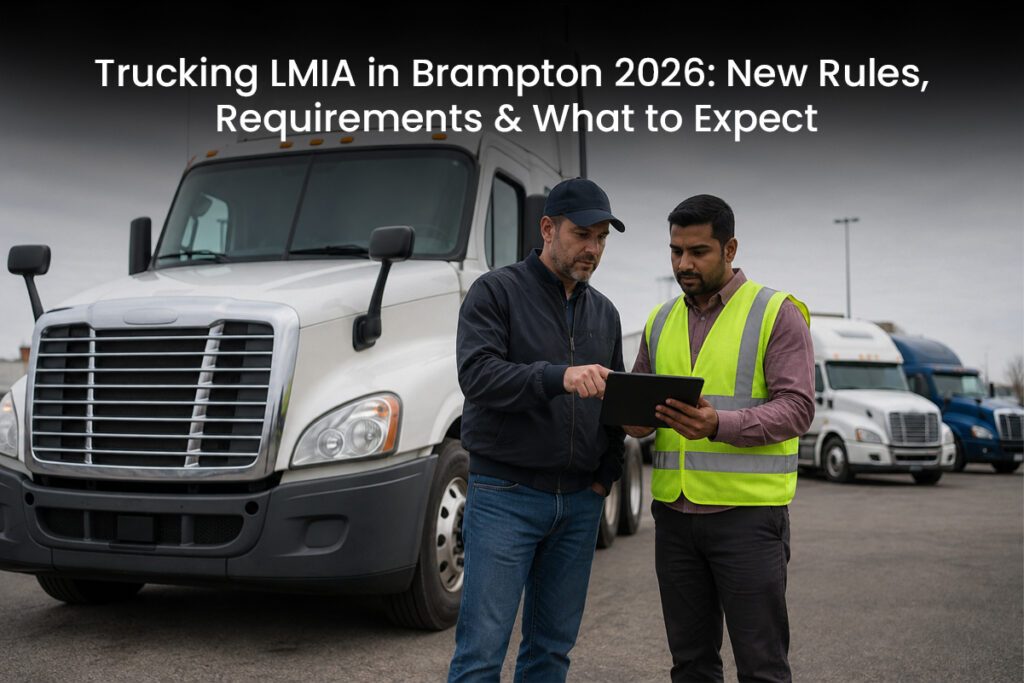
How to Get Hired & Get a Truck Driver LMIA Based Work Permit in Canada Canada’s trucking industry continues to seek qualified drivers. The demand remains steady as the logistics sector grows and experienced drivers retire. This creates opportunities for skilled drivers from around the world. Wanting to drive in Canada and actually getting here...

How to Get Hired & Get a Truck Driver LMIA Based Work Permit in Canada

LMIA Based Work Permit in Canada

Canada’s trucking industry continues to seek qualified drivers. The demand remains steady as the logistics sector grows and experienced drivers retire.

This creates opportunities for skilled drivers from around the world. Wanting to drive in Canada and actually getting here are two different things though.

The path involves paperwork, requirements, and a process that trips up even experienced applicants. Here’s how it works when you’re going after a truck driver LMIA based work permit Canada.

What LMIA Means for Truck Drivers

LMIA stands for Labour Market Impact Assessment. It’s Canada’s way of checking if hiring you makes sense for their job market.

A Canadian employer needs to prove they couldn’t find a local driver first. They advertise the position and interview candidates. They document everything they do. Only after showing real effort to hire locally can they request an LMIA for a foreign worker.

This protects Canadian workers while filling real labor shortages. Truck driving qualifies because demand keeps exceeding local supply.

Getting an LMIA based work permit Canada means an employer has vouched for you. They’ve told the government you’re worth the extra effort and cost. That backing helps when immigration officers review your file.

What Employers Want in Foreign Truck Drivers

Canadian trucking companies don’t hire just anyone from overseas. The costs and paperwork mean they need drivers who’ll stay and perform well.

Most employers want specific things. A clean driving record matters a lot. Your experience level needs to match what they offer. Some routes need specific endorsements or training.

Language skills come up often. You don’t need perfect English or French. You need enough to read signs and talk with dispatchers. Safety depends on clear communication.

Your work history tells them a story. Gaps need explanations. Job hopping raises questions. Steady work with good references makes employers confident about sponsoring you.

At Canus Immigration, we’ve helped dozens of truck drivers through this process. The ones who succeed share common traits. They’re realistic about timelines. They stay on top of documents. They’re honest about their skills.

The Job Search Strategy That Works

Finding a Canadian employer willing to sponsor you takes strategy. Random applications rarely work. Start by researching companies known to hire foreign workers. Larger trucking firms handle LMIA applications more often. They have HR teams who know the process.

Customize every application. Generic resumes get ignored. Show how your experience matches their needs. Mention you’re willing to relocate and you know how LMIA works.

Use these approaches to stand out:

  • Connect with recruitment agencies that focus on trucking and foreign workers
  • Join online forums where Canadian trucking companies post jobs
  • Network through LinkedIn with people in Canadian trucking
  • Research provinces with higher driver demand and target those areas

Most successful applicants apply to 30 or 40 companies before getting serious interest. You only need one yes.

Follow up smartly. Send a polite email two weeks after applying. Calling shows even more initiative. Canadian employers like candidates who show real commitment.

The LMIA Application Process from the Employer’s Side

Knowing what your employer goes through helps you support the process better.

Once a company decides to hire you, they start the LMIA application. They submit job details and salary information. They prove they tried to recruit locally. Processing typically takes two to three months.

The government reviews everything carefully. Are they paying fair wages? Did they really try to find local workers? Does the job match industry standards?

Your potential employer must show they advertised on the national job bank. They need at least two other platforms too. They keep interview records and reasons why they didn’t hire local candidates. Approval is great but you’re not done yet. The LMIA lets your employer hire you. Now you need to get your actual work permit.

Your Work Permit Application Steps

With an approved LMIA, you can apply for your work permit. This part is on you. Gather your documents first. You need a valid passport and proof of work experience. Add educational credentials, police certificates, and medical exam results. Missing even one thing delays everything.

The application goes online through the IRCC portal. Fill out forms carefully. Any mismatch between your application and the LMIA raises red flags.

Processing times vary by country. Some applicants wait six weeks. Others wait six months. Check current times for your location before making plans.

Stay in touch with your employer while you wait. Update them on your application status. Keep your start date flexible. Good communication prevents problems.

At Canus Immigration, we walk clients through each requirement. Small mistakes cause big delays. Professional help often makes the difference between approval and rejection.

Preparing for Life as a Truck Driver in Canada

Your work permit approval is just the start. Getting ready for actual life in Canada matters just as much.

Research your destination province well. Winter driving in Alberta looks very different from routes in British Columbia. Climate affects what you pack and how you drive.

Sort out housing early. Some employers provide accommodation at first. Others expect you to find your own place. Know which applies to you and plan ahead.

Canadian trucking rules might differ from what you know. Hours of service rules vary by province. So do logbook requirements and inspection procedures. Study these before you arrive.

Budget carefully for your first few months:

  • Currency exchange and setup costs add up fast.
  • A financial cushion helps you adjust with less stress. Make sure you have some savings for emergencies.
  • Factor in winter clothing if you’re moving somewhere cold.
  • You should plan for potential delays in your first paycheck.

Get your Canadian driver’s license upgraded soon after arrival. Your foreign license works at first. A Canadian Class 1 license opens more doors and often pays better.

Truck driver Canada immigration pathways exist because the industry needs qualified professionals. Provincial programs often include trucking jobs. Some paths lead to permanent residency within a few years.

Starting with a work permit gives you time to settle in. You learn Canadian roads and build local work history. You prove your value. Many temporary workers become permanent residents after showing they’re reliable.

The process takes effort, patience, and good guidance. For qualified drivers willing to do the work, Canada offers stable jobs, fair wages, and a chance to build something new.

Your experience behind the wheel matters. Your willingness to handle immigration processes matters more. One gets you started. The other gets you there.